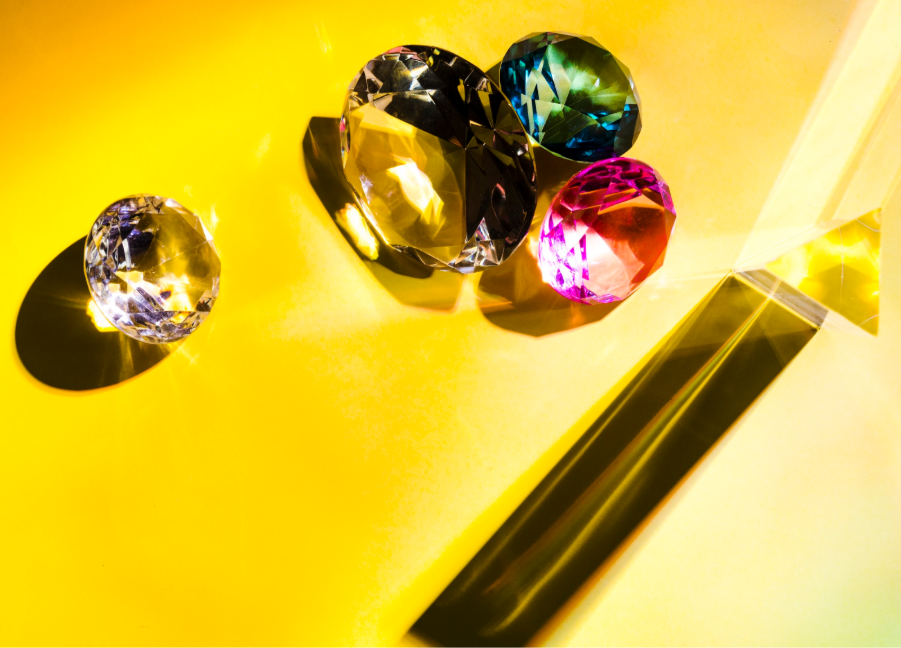
Understanding diamond inventory is essential when evaluating cash for diamonds, diamond shapes and sizes in a trade context. The global diamond market does not price stones based on appearance alone. Instead, value is determined by measurable factors such as cut precision, colour grading, clarity, certification, and carat weight.
At Celsteel, the focus is strictly on high-quality, certified diamonds of 1 carat and above, as these are the only categories with consistent trade demand and resale potential. This guide explores how cuts, colours, and sizes influence valuation, while addressing real-world trade considerations without exaggeration or misleading claims.
Understanding Diamond Shapes and Sizes in the Trade Market
In this section, we explain how diamond shapes and sizes influence pricing, liquidity, and buyer demand in professional markets.
Diamond Shapes vs Diamond Cuts
Diamond shape refers to the external form, while cut refers to how well the diamond interacts with light. These are often confused but have different implications for value.
Common shapes include:
- Round
- Oval
- Cushion
- Emerald
- Pear
- Princess
Among these, round brilliant diamonds dominate the trade due to consistent demand and pricing transparency. In contrast, fancy cut diamonds can vary significantly in value depending on proportions and market trends.
From a trade perspective, we prioritise shapes that maintain liquidity. Round stones are easier to resell globally, while fancy shapes require more selective buyers.
Carat Size and Trade Viability
Carat weight directly impacts pricing, but not all sizes perform equally in the resale market.
Key trade insights:
- Below 1 carat: Limited resale demand, often price suppressed
- 1 carat and above: Stronger liquidity and pricing stability
- High-carat stones (2ct+): Premium category with selective demand
At Celsteel, only diamonds 1 carat+ are considered feasible for purchase due to consistent market demand. Smaller stones, including round brilliant melee, are widely available and typically lack individual resale value.
Cut Quality and Its Impact on Value
Cut quality is one of the most important technical factors in diamond valuation. This section explains how it affects pricing and trade desirability.
What Defines Cut Quality
Cut is graded based on how effectively a diamond reflects light. It includes:
- Proportions
- Symmetry
- Polish
Grades typically range from Excellent to Poor.
Why Cut Matters in Trade
Diamonds with higher cut grades:
- Reflect more light, improving visual performance
- Maintain stronger resale demand
- Are easier to price using trade benchmarks
Lower cut grades often result in discounted valuations, even if other factors such as carat and clarity are high. For trade buyers, cut is not aesthetic preference, it is a measurable contributor to value.
Colour Grading Explained with Trade Accuracy
Colour grading measures the absence of colour, not the presence of sparkle or brightness. This distinction is essential for accurate valuation.
Understanding Colour Grades
Diamonds are graded from:
- D to F: Colourless
- G to J: Near colourless
- K and below: Noticeable tint
Trade Perspective on Colour
From a resale standpoint:
- D to F colours command premium pricing
- G to H remain commercially viable
- Lower grades face reduced demand
It is important to avoid vague descriptions such as “bright white.” Trade pricing relies strictly on standardised grading scales, not subjective language.
Clarity and Internal Characteristics
Clarity refers to internal inclusions and external blemishes. It directly affects rarity and pricing.
Clarity Grading Scale
- FL (Flawless)
- IF (Internally Flawless)
- VVS1/VVS2 (Very Very Slightly Included)
- VS1/VS2 (Very Slightly Included)
- SI1/SI2 (Slightly Included)
Trade Implications of Clarity
Higher clarity grades:
- Are rarer
- Maintain stronger resale demand
- Attract premium buyers
However, extremely high clarity does not always guarantee proportionally higher resale value unless combined with strong cut, colour, and carat weight.
Certification and Its Role in Cash for Diamonds, Diamond Shapes and Sizes
Certification is essential when evaluating cash for diamonds, diamond shapes and sizes. Without it, accurate pricing becomes difficult and often unreliable.
Accepted Certification Standards
Only recognised laboratories are trusted in trade markets:
- GIA (Gemological Institute of America)
- AGS (American Gem Society)
- IGI (International Gemological Institute)
Certification vs Non-Certified Diamonds
| Factor | Certified Diamonds | Non-Certified Diamonds |
| Grading Accuracy | Standardised and verifiable | Subjective |
| Resale Value | Higher and more stable | Often discounted |
| Buyer Confidence | Strong | Limited |
| Trade Acceptance | Widely accepted | Often rejected |
Certification ensures transparency and allows buyers to assess diamonds based on consistent criteria.
Realistic Value Factors in the Diamond Trade
This section highlights how value is determined in professional markets, avoiding common misconceptions.
Key Value Drivers
- Certification (GIA, AGS, IGI)
- Carat weight (1ct+)
- Cut quality
- Colour and clarity
- Market demand
What Does Not Add Trade Value
- Retail branding
- Emotional significance
- Purchase price history
Trade buyers assess diamonds based on current market conditions, not past retail pricing.
Lab-Grown vs Natural Diamonds: Trade Reality
Understanding the differences between lab-grown and natural diamonds is essential for accurate valuation.
Financial Comparison
| Factor | Natural Diamonds | Lab-Grown Diamonds |
| Supply | Limited by mining | High and increasing |
| Price Stability | Relatively stable | Declining |
| Resale Value | Market-dependent but present | Minimal to none |
RESALE VALUE:
- Natural diamonds: Dependent on quality and certification
- Lab-grown diamonds: Typically, low due to oversupply
Ethical and Environmental Considerations
It is important to avoid simplified claims.
- Natural diamonds involve mining impact, including land use and resource extraction
- Lab-grown diamonds require high energy consumption and industrial processes, often involving non-renewable energy sources
Neither option is impact-free. Trade buyers focus on verifiable factors rather than marketing claims.
Emotional and Market Perception
Natural diamonds retain stronger cultural and historical significance in resale markets. Lab-grown diamonds are generally viewed as lower-cost alternatives with limited secondary market demand.
Step-by-Step Process for Selling Diamonds in the UK
Selling diamonds requires a structured and realistic approach. This section outlines the key steps involved.
Step 1: Verify Certification
Ensure your diamond has a valid certificate from GIA, AGS, or IGI. Without certification, trade buyers may not proceed.
Step 2: Assess Quality Criteria
Evaluate:
- Carat weight (minimum 1 carat for trade relevance)
- Clarity and colour grades
- Cut quality
Step 3: Research Buyers in Your Local Area
Look for professional buyers in your local area or within the UK who specialise in high-quality diamonds. Avoid general jewellery buyers who may not operate at trade level.
Step 4: Request Professional Valuation
Use trusted services such as diamond valuation services to obtain an accurate assessment based on current market conditions.
Step 5: Complete the Transaction
Finalise the sale with proper documentation, ensuring:
- Certification is included
- Payment terms are clear
- Records are retained
Common Misconceptions About Diamond Inventory
Misunderstandings can lead to unrealistic expectations when selling diamonds.
Frequent Misconceptions
- All diamonds increase in value
- Retail price equals resale value
- Certification is optional
- Lab-grown diamonds hold long-term value
Trade Reality
Only high-quality, certified diamonds (1 carat+) maintain consistent demand. Lower-grade stones may not be viable for resale in professional markets.
Conclusion
Evaluating cash for diamonds, diamond shapes and sizes requires a clear understanding of measurable factors rather than assumptions or marketing language. Cut, colour, clarity, certification, and carat weight all play a role in determining real market value.
At Celsteel, the focus on certified, high-quality diamonds of 1 carat and above reflects actual trade demand. By understanding how inventory is assessed in professional markets, sellers can approach the process with realistic expectations and informed decision-making.
Contact Us
If you are considering selling a certified diamond, visit our Contact Us page. You can also explore our certified diamond purchasing process and professional valuation services for further guidance.
FAQs
Selling uncertified diamonds is difficult in trade markets, as buyers rely on standardised grading for valuation.
Diamonds below 1 carat generally have limited resale demand unless part of a larger jewellery piece.
Yes, fancy cut diamonds often require specific buyers, making them less liquid than round diamonds.
The best offers depend on certification, carat weight, cut quality, clarity, and current market demand.

